LG U+ to Unveil Four Security Technologies Drawing Global Attention
■ Showcases four security solutions at MWC26, focusing on preemptive blocking and neutralizing hacking damage at its source
■ Introduces AlphaKey, a hyper-personalized security solution that analyzes customer patterns and logs to block abnormal access in advance
■ Differentiates with homomorphic encryption, which stores and computes data in an encrypted state so that data remains safe even if leaked
■ Shifts the telecommunications security paradigm with optical transport equipment featuring post-quantum cryptography (PQC)
■ Unveils U+SASE, a cloud-optimized solution integrating network and security, with generative AI security as a key strength.
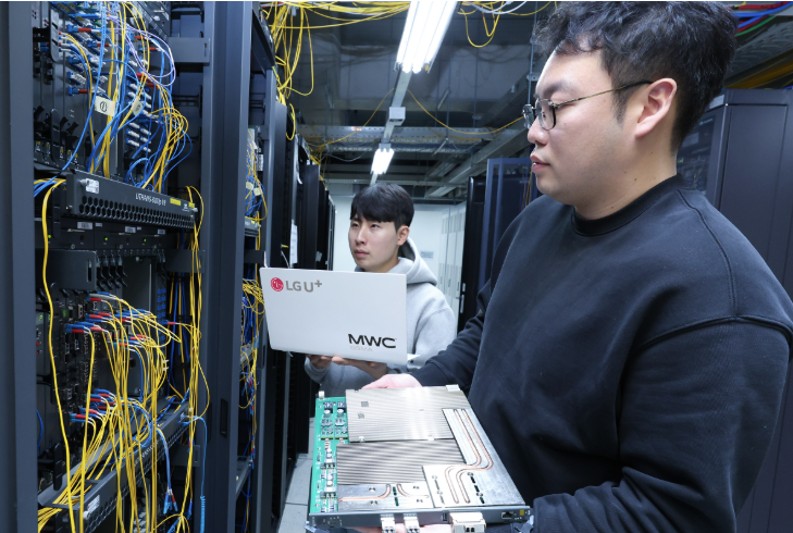
LG U+ will unveil next-generation security technologies at MWC26 to counter cyber threats that are becoming increasingly sophisticated as AI adoption expands. Through security technologies that encompass AI-based analysis, advanced cryptography, and preparedness for future threats, the company aims to set a new standard for telecommunications safety that gives every customer peace of mind.
At next month’s MWC26 in Barcelona, Spain, LG U+ will present four key innovations: AlphaKey, a cloud-based integrated account management solution applying customer-specific AI anomaly detection; homomorphic encryption that the company plans to apply to its AI call app; optical transport equipment featuring post-quantum cryptography (PQC); and U+SASE, a next-generation security platform optimized for the generative AI era. These technologies prioritize proactive protection over reactive responses and are designed to neutralize the data at the source to prevent hacking or data breaches from causing damage.
The AlphaKey account management platform uses AI to learn the access and behavior patterns of users and administrators at each client company, detecting abnormal access and attempted insider leaks in real time. By comprehensively analyzing factors such as access locations, devices, working hours, and access history, it automatically blocks the connection or requires step-up authentication whenever an unusual login attempt is flagged.
Monitoring does not stop at authentication. For example, If a user accesses the system outside working hours and either views high volumes of records within a short period or initiates bulk report downloads, the system instantly flags the anomaly, blocks the session, and alerts the administrator. Built to consider everything from account credential leaks to deliberate insider data leaks, AlphaKey can respond to the growing number of sophisticated attacks in the AI era.
AlphaKey also uses AI-based anomaly detection to catch threats before they can cause damage, shifting from reacting “after abnormal behavior occurs” to “identifying early warning signs.” By tracking and analyzing even subtle deviations from normal patterns, the system enables a rapid, preemptive response. It then guides follow-up measures by providing automated analysis reports on how far the risks have spread.
LG U+ will also introduce homomorphic encryption, which it plans to integrate into its AI call app, ixi-O. This advanced technology allows data to be stored, computed, and searched while remaining encrypted, making it impossible to interpret even if it leaks. By contrast, conventional security methods are limited because they require encrypted data to go through decryption before it can be used. This leaves raw data exposed in plaintext, creating a critical vulnerability if a breach occurs.
With homomorphic encryption, call data is stored in an encrypted state and is processed without decryption even during searching and use. Even if a smartphone is hacked or data is leaked externally, hackers cannot interpret the contents. By applying homomorphic encryption to ixi-O, LG U+ aims to protect data from hacking-related leaks at its source.
LG U+ will also unveil optical transport equipment featuring post-quantum cryptography (PQC), designed to neutralize future security threats. PQC leverages complex mathematical problems that are difficult to solve even with quantum computers, amid concerns that quantum computers could render existing cryptographic systems ineffective.
LG U+ has implemented an integrated interface that supports all of the latest PQC algorithms proposed by the U.S. National Institute of Standards and Technology (NIST) and the Korea Post-Quantum Cryptography Research Group (KpqC). This allows customers to freely select and apply the algorithm that fits their security environment and policies, while ensuring stable operations without service interruption when replacing algorithms.
LG U+ will also present U+SASE, Korea’s first domestically developed Secure Access Service Edge platform. U+SASE combines network and security into a single service, allowing organizations to manage all security functions on one platform instead of the traditional method of managing each one separately. This enables real-time monitoring of external access paths while helping reduce the burden of security operations.
A key differentiator for U+SASE is its Generative AI Security (GenAI Security). To prevent confidential corporate data from leaking through generative AI, this platform features automatic filtering of risky prompts, sensitive data masking, and data loss prevention for AI.
Through a security portfolio spanning AI, cryptography, and quantum technologies, LG U+ is reinforcing its “proactive security” strategy to protect customer data and services across the board.
Eomgae Joo, Vice President and Head of Wireline Business at LG U+, said, “As AI-based hacking surges and threats grow, our goal is to deliver security technologies that give our customers absolute peace of mind.” He continued, “We will continue to advance our technology to provide differentiated security services that customers can trust and use with confidence.”
LG U+ to Unveil Four Security Technologies Drawing Global Attention
■ Showcases four security solutions at MWC26, focusing on preemptive blocking and neutralizing hacking damage at its source
■ Introduces AlphaKey, a hyper-personalized security solution that analyzes customer patterns and logs to block abnormal access in advance
■ Differentiates with homomorphic encryption, which stores and computes data in an encrypted state so that data remains safe even if leaked
■ Shifts the telecommunications security paradigm with optical transport equipment featuring post-quantum cryptography (PQC)
■ Unveils U+SASE, a cloud-optimized solution integrating network and security, with generative AI security as a key strength.
LG U+ will unveil next-generation security technologies at MWC26 to counter cyber threats that are becoming increasingly sophisticated as AI adoption expands. Through security technologies that encompass AI-based analysis, advanced cryptography, and preparedness for future threats, the company aims to set a new standard for telecommunications safety that gives every customer peace of mind.
At next month’s MWC26 in Barcelona, Spain, LG U+ will present four key innovations: AlphaKey, a cloud-based integrated account management solution applying customer-specific AI anomaly detection; homomorphic encryption that the company plans to apply to its AI call app; optical transport equipment featuring post-quantum cryptography (PQC); and U+SASE, a next-generation security platform optimized for the generative AI era. These technologies prioritize proactive protection over reactive responses and are designed to neutralize the data at the source to prevent hacking or data breaches from causing damage.
The AlphaKey account management platform uses AI to learn the access and behavior patterns of users and administrators at each client company, detecting abnormal access and attempted insider leaks in real time. By comprehensively analyzing factors such as access locations, devices, working hours, and access history, it automatically blocks the connection or requires step-up authentication whenever an unusual login attempt is flagged.
Monitoring does not stop at authentication. For example, If a user accesses the system outside working hours and either views high volumes of records within a short period or initiates bulk report downloads, the system instantly flags the anomaly, blocks the session, and alerts the administrator. Built to consider everything from account credential leaks to deliberate insider data leaks, AlphaKey can respond to the growing number of sophisticated attacks in the AI era.
AlphaKey also uses AI-based anomaly detection to catch threats before they can cause damage, shifting from reacting “after abnormal behavior occurs” to “identifying early warning signs.” By tracking and analyzing even subtle deviations from normal patterns, the system enables a rapid, preemptive response. It then guides follow-up measures by providing automated analysis reports on how far the risks have spread.
LG U+ will also introduce homomorphic encryption, which it plans to integrate into its AI call app, ixi-O. This advanced technology allows data to be stored, computed, and searched while remaining encrypted, making it impossible to interpret even if it leaks. By contrast, conventional security methods are limited because they require encrypted data to go through decryption before it can be used. This leaves raw data exposed in plaintext, creating a critical vulnerability if a breach occurs.
With homomorphic encryption, call data is stored in an encrypted state and is processed without decryption even during searching and use. Even if a smartphone is hacked or data is leaked externally, hackers cannot interpret the contents. By applying homomorphic encryption to ixi-O, LG U+ aims to protect data from hacking-related leaks at its source.
LG U+ will also unveil optical transport equipment featuring post-quantum cryptography (PQC), designed to neutralize future security threats. PQC leverages complex mathematical problems that are difficult to solve even with quantum computers, amid concerns that quantum computers could render existing cryptographic systems ineffective.
LG U+ has implemented an integrated interface that supports all of the latest PQC algorithms proposed by the U.S. National Institute of Standards and Technology (NIST) and the Korea Post-Quantum Cryptography Research Group (KpqC). This allows customers to freely select and apply the algorithm that fits their security environment and policies, while ensuring stable operations without service interruption when replacing algorithms.
LG U+ will also present U+SASE, Korea’s first domestically developed Secure Access Service Edge platform. U+SASE combines network and security into a single service, allowing organizations to manage all security functions on one platform instead of the traditional method of managing each one separately. This enables real-time monitoring of external access paths while helping reduce the burden of security operations.
A key differentiator for U+SASE is its Generative AI Security (GenAI Security). To prevent confidential corporate data from leaking through generative AI, this platform features automatic filtering of risky prompts, sensitive data masking, and data loss prevention for AI.
Through a security portfolio spanning AI, cryptography, and quantum technologies, LG U+ is reinforcing its “proactive security” strategy to protect customer data and services across the board.
Eomgae Joo, Vice President and Head of Wireline Business at LG U+, said, “As AI-based hacking surges and threats grow, our goal is to deliver security technologies that give our customers absolute peace of mind.” He continued, “We will continue to advance our technology to provide differentiated security services that customers can trust and use with confidence.”